Sunday, September 27, 2009
An artist of the surrounding
I Try to Paint with Pictographic Writing
A Mixture of Painting and Writing.
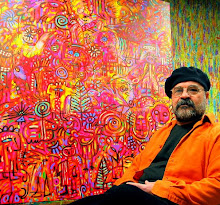
The degree of mania displayed by the painter Sadradeen Ameen concerning the surrounding and environment , their beings and creatures which he takes as a visual means to reveal the aesthetic data hidden within the surrounding entity is his favorite subject , and maybe the only one. Whereas the findings of that surrounding constitute the painter’s gate to enter that subject. It is a gate with a sap retroactive direction that begins with the identity of the artist towards the findings of the surrounding then returns to him. This confirms considering his experience one of the Iraqi expressionist – abstractionist experiences that take their inspiration from the surrounding , and try to stamp their contents of the surrounding findings with the formal convictions in which the painter Sadradeen Ameen believes and on which he establishes his formal system. At the time when huge numbers of Iraqi artists believed that the subject of their work was the fossils of ancient walls , Sadradeen Ameen didn’t want to follow the traces of those painters or any others. He resorted to head inward when he began filling his plate surface with contents of his memory , such as creatures he lived with for a long time ; those creatures have amalgamated with his awareness of the form and became part of it in its interweaving with nature. His plate appears to us as if containing a mixture of masses of humans , some of them wearing masks , others having horns just like the ancients who used to paint the magicians in the form of shamans or fairy animals , their shapes being mixed with countless variety of masses of: fish , cats , snakes , turtles , birds , moons , stars , suns , plants , reptiles , trees and roses gathered in carnivals in which all these masses participate. These tales and legends represented a principal source in forming the cultural structure derived from the popular mythology of the mountain forests areas in Iraq which Sadradeen Ameen reshaped them through an art of high techniques and structural formation.
Q. You have been classified as “an artist of the surrounding” or a realistic artist of special pattern , or more precisely an expressionist- abstractionist artist , what’s your opinion about that? And do you agree that the task of art is to collect the findings of surrounding then making the abstraction , reduction and formal modification processes on them?
R. I prefer the personification painting because there is a human , spiritual and psychological dimension in that , and I want my plate to be filled with life , I don’t want it to be freeze or solid or incomprehensible plate in the eyes of the others. I also want it to be effective and does not strike the viewer , but it should enjoy him. The most sublime of the aims in art is , in my opinion , to enjoy the others , thus I choose my vocabularies with utmost care , and even when I repeat them , I try to do that in a different way in each new work.
I don’t want to be classified within a certain frame , as an expressionist or abstractionist or primitive because I consider that a constraint that restricts the artist’s movement , and because I am an abstractionist artist , and in each phase I have my own experiences which are different , so my teacher in the colour lessons , the late Muhammed Sabri has classified me , when I was a student in the Academy of Fine Arts in Baghdad , as “bestial” painter , in other words belonging to the bestial school , and he was right in that , because I was at that time affected by the style of Henri Matisse , and I consider that my teacher Muhammed Sabri has early discovered me.
I try nowadays to combine all styles together , in spite of the difficulty of doing such an adventure ; I consider the good artist a good adventurer , and a discoverer of treasures , secrets and ambiguity in life. It is not important to succeed or fail , but it is important to try , didn’t Andre Briton say that ‘the idea of success and failure is under my feet”?
The task of the artist is in my opinion , not just to collect the findings from the surrounding ; then making the reduction , abstraction and modification , but his task is to enrich the spiritual side of man , and to intensify the meaning of life , to activate the pulses of the heart. The artist is a creator of magic , the voice of the soul that expresses the primitive intuitional feelings , a spontaneous motive of the unconscious , a scout of unfamiliar beauty , a searcher for primitive purity that man has lost now. Painting is a creation like nature , because the artist is a man who adds a form to an existing form , and if this kind of form is only a form without soul , then it’s a dead form. Art is not just a thing that we find in museums and art galleries , it is the search for the essence of truth , and it is also an explanation of nature. Art is a question with no answer , and it is the task of the artist to search for the answer.
Q. Why have you considered the other creatures as your relation with the surrounding , and you haven’t used the walls , letters and signals as in the case of the current wave of artists of your generation?
R. We are all living creatures possessing a life and existence based on conscious and unconscious feelings , I am connected with the symbolic imagination of those creatures: whether they are realistic or legendary , I search for the pure form , in other words I am trying to preserve the language of visual and internal dialogue in the work of art to convey the essence of artistic reaction. I don’t want any kind of supervision on my works , I want them to penetrate the depths of creative legendary time. Legends are the source of constant power in all forms of thinking and art , knowing these creatures totally gives me an internal lust , from all that springs later on their symbolic dimension as a special pattern of continuous internal explosions inside the artist.
I have found my work fond of , haunted , enchanted with the magic of creatures and their astonishing presence in my works , there is a strange felling that drives me to draw these creatures , I have been born within an oriental environment in which the animal element had a dominating presence as a body , movement , tales , legends , symbols , superstitions and religious rituals. The environment in which I lived was , and still remains , primitive , wild and innocent environment. There were , and still remaining , many analogous descriptions and metaphors concerning the animal since Gilgamesh to our present day.
The creatures sometimes appear in my paintings like a body , and sometimes like metaphors ; that’s because I am fond of meditating creatures: animals , birds , fish and insects. My creatures are not tamed , they are irrational , and sometimes I don’t want them to rotten , I want them to be closer to childhood and it’s innocence , I want them to be astray , wild and far from epistemological structure. The way in which I see them , they appear beautiful and effective , the existence of creatures sharpens the imagination , and they bestow on us new senses. Once a Japanese artist was asked why doesn’t he paint animals , he replied “because animals don’t betray”.
My creatures are spiritual imaginations , they represent a constant source of astonishment , and a return to the spirit of earth , they are ceremonial creatures , carnival , dreamlike shapes , they are magical totems , glaring with ceremonial light and affection , my creatures signify a total civilization , a purification of man’s soul from evil latent in the selves of human kind that is thirsty to destroy the man’s kingdom of dream and calmness. I call for the original calmness , the womb where there is no end to sensuality and enjoyment , where the essence of thing is to be found.
Q. Why do you wrap your creatures with thick walls , is it a fear from the outside and a regression to the inside?
R. This is an important question , and an American critic , who acquired two of my plates at that time , has asked me the same question too. There is a famous sentence for the American writer in which he says “the animal creatures live outside , and we human beings live inside”. Yes , I think it’s a kind of inward regression , that’s one side of the issue , the other is that I look to the matter as an internal reflection of the sensual facts. I want also , through this hard wrapping of my vocabularies to draw the attention of my audience to the shape of the creature in an extraordinary way , and to emphasize on my vocabularies ; because each creature has it’s own language , it’s own vision , it’s own philosophy that differs from the rest of the vocabulary in the same plate. By this way I want to preserve the independence of the creature or the vocabulary , considering that it is an active element having it’s own entity. I wish to clarify my own vision to the world explicitly. The writer John Kinsey says , “art should be clear like the flame”.
Through my observations and meditations of many paintings on walls , caves , and ancient carvings on stones , and also the archeological findings , I found that most of the paintings were representing a hard external determination of the form without any details inside the general shape. It was scarcely that the forms interfere with each others. Thus I find myself like that primitive hunter when he paints on walls of caves with high intuition the shape of the creature using hard , powerful , elegant , deep and touching lines , in order to teach us afterwards with his primitive instincts the first lesson in painting. I feel indebted to that primitive hunter who is in fact me.
Q. Your forms began to move towards simplicity , do you expect that you move totally to a pure semiotic calligraphical language or to the beginnings of Cuneiform writing?
R. This is one of the most difficult questions that might face the painter , and I usually ask myself this question after putting the finishing touches on the plate. When I begin painting , I paint with excitement , impulsion , desire and enjoyment , then when the plate is finished , an unfamiliar feeling of joy , happiness and childish overwhelming gaiety haunts me. But unfortunately that joy doesn’t last long , after a while I find myself felling sad , worried and bewildered , and I ask myself how would be the shape of my next plate? Those moments are the worst for the artist , all that I know is that I paint and don’t know where to my creatures leading me , where are they taking me , and should I abandon them someday , and when should I stop? There is an unknown fate waiting for my creatures ; but I will continue painting as long as there are: humans , creatures , birds , fish , legends , tales , dreams and so on ... So I paint with wounded desire , painting needs oblation and sacrifices , the artist himself may turn someday to an oblation like what happened to Van Gogh , Mark Rothko , and De Stale. After all that, I don’t know whether I’ll resort to another language. I think that I may , when I exhaust all my oxygen , abandon my creatures and take another state , maybe I return to the pre- calligraphy period , calligraphy has lost its first glare because of misunderstanding of its real secrets and working on its surface in a deforming way incomprehensible to many artists as a spiritual and creative value.
I am now experimenting , searching , studying and penetrating in the field of pictography , it is an old representational writing that mixes between painting and writing , it is in a way like the hieroglyphic sketches and representational writing in China and Japan , it also resembles the real entrance to the art of painting and writing simultaneously. I consider it the encyclopedia of representation , which contain all the expressional vocabularies in the universe: primitive animals and plants forms that are proliferating in a dreamlike world without beginning or end.
That’s what I try to do ; and I feel that I am moving in this direction searching for a simple and real happiness , which is an existentialist search for the soul of innocence in all its details , that’s what my imagination contains now.
Q. What are the conditions of the Iraqi artists in America? And what are the effects of emigration on your artistic achievement?
R. I would like to refer first that there is in America very restricted number of Iraqi artists , because most Iraqi artists , since the sixties, have gone to study painting in Italy and France specifically, and the first artists who have left Iraq to study painting in America through official scholarship in the late seventies were: Waleed Sheet and Sahib Ahmed , and these two artists returned to Iraq , in addition to the artists Hashim Al- Taweel , Muhammed Taban and Sadi Abbas Al- Babili , those three are living presently in America. In the nineties another group of artists emigrated to America and most of them are specifically students of the Academy of Fine Arts, but those are very few indeed. Unfortunately , till now , the Iraqi artist hasn’t presented in America something significant , and Iraqi art doesn’t exist there in its wide meaning , it is almost impossible that three artists meet together in one place. There are many reasons for that , for example there are in America thousands of artists , thousands of foreign artists , and most of the galleries are booked for at least two years , some of them for fife years. On the other hand there is the difficulty of living , the artist has to find a specific work for himself before anything else , and this work exhausts all his energy , then he has to acquire the language very well. Life in America is alluring , fast and expensive , it makes you forget everything. The rhythm of life moves in astonishing speed ; days and years pass like lightning , that’s why many people feel lost and loneliness. So the artist who cannot withstand in the face of all this suffering will eventually and unfortunately be lost and expired , but the artist who holds inside him the seed of art and its love , when he is true and honest with himself , will undoubtedly succeed because America is the country of golden chances , and New York city is now the centre of attraction to artists ; the artist finds all what he dreams of in this city. There is a proverb in America which says: Man can live in any quarter of New York forever without need to anything else , or he may leave anywhere.
In a very touching letter , the poet and critic Farouk Yousif wrote to me saying that the good artist must face bravely any possible danger if he wants to be a good artist. These words are very realistic and important , because the word “artist” is a great word , and art needs great sacrifices.
Yes , immigration is hard , but the true artist was , and still is , a strange creature in all ages , and immigration is very effective , its effects are numerous. I personally didn’t feel till now the momentum of immigration because I became free. Freedom is the most beautiful thing in life , and freedom makes you forget the feeling of immigration. Hemingway says , “Whenever freedom is small , man would be small”. Thus I came to the new world to get rid of slavery , to be a free creative artist. Here I found myself: thinking well , painting well , reading whatever I want , visiting art galleries and important museums , observing the works of great artists closely , making my own exhibitions and participating in other exhibitions.
When I reached America , I was carrying thirty dollars in my pocket in addition to some of my plates and many dreams. After six months , I made my first personal exhibition in America , and half of my works were sold on the eve of opening the exhibition. After a year of my residence there , I participated in an exhibition and was granted the first prize , and after two years I participated in an exhibition consisting of two hundreds and twenty artists and got the evaluative prize , my plates appeared on covers of newspapers and the American Fox 43 cannel broadcasted a report about me. Just part of this wouldn’t have happened to me if I were in my country and among my own people , all this happened to me while I was in a strange country that became now my own country.
Sunday, July 26, 2009
Thursday, May 28, 2009
Sunday, April 05, 2009
Azzaman International Newspaper - Issue 3118 - Date 11/10/2008جريدة
Tuesday, March 31, 2009
رحلة الى الينابيع الأولى وصولا الى الفن غير المؤدلج
سلام دواي - أستراليا
العودة الى الينابيع , وصولا الى رعشة الفنان الرافديني الأول وهو يخط طلاسمه و رؤاه المشوشة ناقلا دهشته وخوفه على جدران الكهوف ....هو ذا ما ينجذب اليه الفنان ( صدرالدين أمين ) مدفوعا ببراعة فياضة , وبثفافة فنية ترتكزعلى تهميش القوالب الأكاديمية , لصالح وعي السليقة أو عفوية الوعي المتدفقة باخلاص كبير و حس فني مرهف , بقيمة الفن كصلة عاطفية وفكرية وليست هندسية ميكانيكية صماء , بين الفنان و موروثه الحضاري .
مرة قال الفنان الكبير ( جواد سليم ) حين سأله احدهم عن القديم والحديث ( لكي يرسم الرسام لوحة حديثة عليه ان يتمثل القديم كله .... وما ذلك القديم الا دنيا قائمة ) ... ولكن جواد سليم كان ابن مرحلة اخرى مختلفة .. فكان فهمه وتمثله للقديم يصب في الواقع السائد الذي كان في بداية انفتاحه على الغرب , وعلى الأفكار الثورية الجديدة في الرسم .
أما زمن صدرالدين أمين فهو زمن الفن غير المؤدلج ... فنا لايضع أو يضيع نفسه في اية قوالب من شأنها ان تفسد الاتصال العاطفي , فهو يدرك بأن القوالب توابيت التجربة ... تلك التجربة التي يجب ان تبقى متمردة , على كل ما من شأنه أن يجعل الفن محددا بأسس أكاديمية صارمة أو أسيرا للايدلوجيا العمياء التي تجعل الفن لايشي بتلك العاطفة الجمالية والتي تعتبرهي الصلة الأساسية بينه وبين المتلقي ... وبهذا المعنى فأن الفنان صدرالدين أمين دائب البحث عن هذه الصلة وذلك من خلال اصراره على توفير مناخ حميمي , من أكثر مفرداته هيمنة على الملمس هي تلك الأواصر المتماهية بين فن وادي الرافدين القديم والميثولوجيا الشعبية بأعتبارها الأمتداد الحقيقي لذلك الفن والهوية الحقيقية للفن العراقي الأصيل والتي يراهن عليها الفنان متحديا المفاهيم النقدية الجاهزة والمقولبة .
ان المتتبع لتجارب الفنان صدرالدين امين يستطيع أن يتلمس قدرته على انشاء سطوح حملت على متون حكائية أسطورية , لاتتوانى عن الأفصاح الممتع عن مكنوناتها القادمة من عمق الأزمنة , والمتزامنة في الوقت نفسه مع ما أنتجته الثقافة الشعبية من فنون اعتمادا على تراث وادي الرافدين الهائل والخالد وتفرعاته عبر مسيرتها الطويلة متمثلة لكل ما رافق هذه المسيرة من انعطافات وتغيرات بيئية وفكرية ... هذا أضافة الى قدرته على صنع ملمسا مدهشا ومباغتا من خلال أعتنائه باللون والتعامل معه الى حد جعله ( اللون ) كطرف أساسي في التكوين , وهذا اعطى لأعماله بحسب زعمي خصيصتين أساسيتين مهمتين , هما خاصية المضمون الذي يحمل كما اسلفنا متنا حكائيا أسطوريا مكتنزا بالرموز والشفرات والدلالات والعلامات الضاربة في عمق حضارة وادي الرافدين .. وخاصية الملمس الذي يشي بعاطفة جمالية لايمكن تجاوزها , او اغفالها , وهاتين الخصيصتين منحتا اعماله بصمة وهوية فنية مميزة.
وهذا برأيى , ورأي الكثيرين من النقاد نجاحا مهما أخذ يعطي ثماره على شكل معروضات في قاعات ومتاحف مهمة في أوربا وأنكلترا وأمريكا , اضافة الى فوزه بالعديد من الجوائز.
*****
نشرت في جريدة ايلاف الالكترونية بتاريخ
الاربعاء 10 ديسمبر 2003
Saturday, March 21, 2009
Friday, March 20, 2009

صدر الدين أمين
رسام تسكن لحيته العفاريت والكائنات المركبة
المدى - خالد خضير الصالحي
لم يكن إجماع النقاد عندنا على ان الرسام الكردي العراقي المقيم في بنسلفانيا صدر الدين أمين فنان بدائي، دونما أسباب قوية كان أهمها: درجة الهوس التي يبديها ذلك الرسام بالمحيط والبيئة، وموجوداتهما من الكائنات التي يتخذها وسيلة بصرية بهدف الكشف عن المعطيات الجمالية الكامنة في طيات الكيان المحيطي بصفته موضوعه الأثير وربما الوحيد، فكانت لقى ذلك المحيط تشكل بوابة الفنان إليه، لقى كان يبني وفقها منظومته الشكلية، فمن لا يعرفه سيحكم على تجربته وكأنها تجربة رجل بدائي, مازال يعيش في احد أدغال مجاهل أفريقيا الاستوائية, يرتدي لباسا من الريش او الجلد, يركض خلف الطرائد، يعيش في الكهوف والمغارات, وهو لم يفعل شيئا سوى انه نسخ لنا رسومه من صور الطرائد على جدران تلك الكهوف.لم يكن صدر الدين أمين يؤمن بما امن به عشرات من الرسامين العراقيين باتخاذ مستحثات الجدران العتيقة موضوعا لهم فكانوا يستقرئون سطوحها، ويجرون بحوثهم الأركولوجية عليها؛ لاكتشاف كوامنها الإشارية والعلاماتية؛ باعتبارها مقطعا عرضيا, او شريحة نسيجية تحمل واقع الحياة الإنسانية في اصغر تفصيلاتها؛ من خلال اكتشاف مخلفاتها التي تشكل أثرا لمرور إنساني ترك إشارته علي سطح المحيط: كتاباتٍ, وآثاراً, وحزوزا، حينما مثلت هذه الحكايات والأساطير معينا أساسيا في تشكيل البنية الثقافية المستمدة من الميثولوجيا الشعبية لمناطق الغابات الجبلية في العراق, والتي أعاد صدر الدين أمين صياغتها من خلال فن عالي التقنية والصياغة البنائية.يؤكد الرسام صدر الدين أمين في كل عمل جديد، او قديم, بأنه ليس فقط مسكونا بهاجس التوحد مع الطبيعة باستحضار كائناتها, بل هو متوحد بعناصرها, ربما كان ذلك راجعا لإيمانه بحتمية عودة كل كائن، يوما ما، إلى الطبيعة, من حيث أتى، فتتحلل عناصره، وتمتزج بعناصر الطبيعة المكونة, عناصر خرجت منها يوما ما، وستعود إليها يوما، وستنبعث منها تارة أخرى ضمن مكونات كائن آخر مختلف.. وهكذا؛ وبذلك يكون نزوعه نحو تأسيس لوحته من عناصر الطبيعة البكر, إقرارا بوحدة الوجود وعناصره الخليقية التي يحشّدها في لوحته بكرم باذخ, وباندماج ذوباني بين تلك الموجودات, وبشكل تكون فيه تلك العناصر مادة مشرعة دائمة للخلق, فهي إذن عناصر تكوين ( محايدة ), من الناحية ( الاجناسية ), ان صح التعبير, مستعدة لبناء أي عنصر او كائن جديد, فهي دائبة الحركة والانتقال, من كائن لآخر، او من مكان لآخر.ان احد أهم الأدلة على إيمان صدر الدين أمين بوحدة كائنات اللوحة هو تعطل اشتغال فعالية الشفرات الجينية لكل كائن بشكل يخرق مواصفات النوع, ويؤدي إلى امتزاج المواصفات الخليقية للكائنات, فكثيرا ما تتعدد أطراف احد ذوات الأربع, ولعدد غير محدد, في كل مرة, حتى يقترب أحيانا من أشكال الديدان ونحوها, فلا وجود لمواصفات موروثة ثابتة, تحفظ لكل نوع خليقي مواصفاته الجينية وتميزه المحفوظ, وبذلك يبرهن أمين على انه قد خطى خطواته: الأولى والاهم, نحو تحقيق وحدة العالم الحيواني, وصولا إلى تحقيق نزوع الكائنات للعودة إلى أزلها, أي تحللها إلى كائنات مجهرية, من ذوات الخلية الواحدة, خلية محاطة بغشاء يحفظ أجزائها من التبدد, وصولا إلى الخلية ( الحيوا - نباتية ), ان كانت تصح مثل هذه التسمية في علم الأحياء.يحقق الرسام صدر الدين أمين شكلا آخر من أشكال الوحدة على سطح لوحته, بتأكيد ذوبان الحدود الفاصلة بين التشخيص والتجريد, حيث لا يمكن في كل مرة وبثقة, تبين طبيعة العديد من أشكاله, هل هي كائنات مجهرية تمظهرت بمظهر تجريدي, أو ان ما نشاهده نمطا تجريديا تلبس, عبر عملية تشاكل صوري, شكلا ما, شكلا كان قد علق بذاكرته من أشكال الكائنات المجهرية, فيكون ذلك واحدا من أهم أسباب افتراض وجود الوحدة الخلائقية في تجربة هذا الرسام.نتلمس في تجربة صدر الدين, نمطا آخر مهما من التوحد,ذوبانا للحدود بين الهندسي والطبيعي، فقد يتحول قرص الشمس بيسر من دائرة هندسية تامة الاستدارة, إلى كائن أميبي, تخرج أطرافه خارج الشكل الذي كان دائريا فصار شكلا طبيعيا غير تام الاستدارة.ربما نتخيل صدر الدين او يتخيل نفسه في مختبر بيولوجي يقوم بتجارب جينية تمازج بين جينات كائنات مختلفة، فكانت إحدى نتائج تجاربه تلك كائنا (خرافيا) مركبا غريبا، رجلا برأس حيوان، ربما يشكل امتدادا للميناطورات والقنطورات التي كانت تظهر في فنون الرسم على مر العصور، انه كائن بشري مازال محتفظا بكل نوازعه الحيوانية الأصيلة التي يؤكد نمطا منها كل مرة يستبدل فيها رأسه: برأس كلب او ذئب او طائر او ثعلب او قط وحشي، او رأس كائن لا تبين ملامحه، كائن زئبقي متلون يمارس اغرب طقوس السحر والتحولات.مثلما وصف والت وايتمان رجلا تملا لحيته الفراشات؛ فإننا نصف صدر الدين أمين بأنه «رسام تسكن لحيته العفاريت والكائنات المركبة».
http://almadapaper.net/paper.php?source=akbar&mlf=interpage&sid=61142